Backgammon: Making Points
BlogBackgammon: Making Points
If there's one thing that ties all of backgammon together, it's this: which points do you control? Making points gives you safe positions for your own checkers, restricts your opponent's movement, and builds the structures that win games. Get comfortable with this idea and everything else starts to click.
What Does Making a Point Mean?
When you place two or more of your checkers on the same triangle, you've made that point. Your opponent can't land on it. It's blocked to them and safe for you.
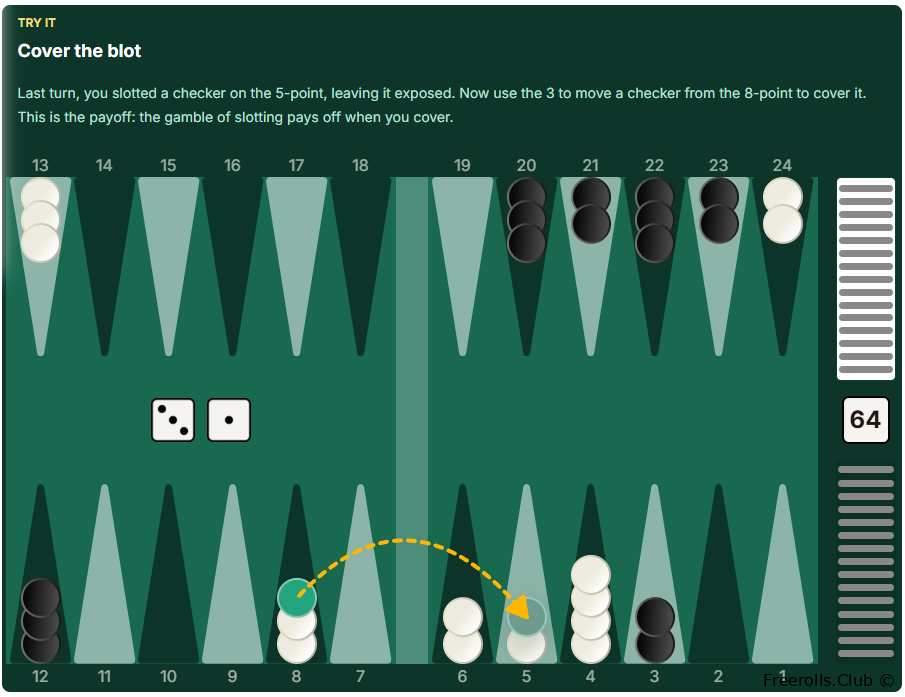
A single checker on a point (a blot) is vulnerable to being hit. Adding a second checker to a blot converts it into a made point. This transition is called covering the blot.
Why Making Points Wins Games
There are three big reasons why controlling points is so valuable:
Board control: every point you own is space your opponent can't use. The more points you make, the fewer options they have.
Safety: made points are safe landing spots. Your checkers can move through the board without risk of being hit on those points.
Blocking: adjacent made points form a prime that traps opponent checkers completely. Four, five, or six points in a row create a wall that nothing can pass.
The Hierarchy of Points: Which Ones Matter Most?
Not all points are equally valuable. Some are worth significant risk to make. Others are useful but not worth a fight.
The 5-Point (The Golden Point)
The most valuable point on the board. Making your own 5-point strengthens your home board offensively (it's a powerful block against escaping checkers) and provides the best anchor position defensively. The opening roll of 3-1 makes the 5-point, and it's the best first roll in the game for exactly this reason.
The Bar Point (7-Point)
The bar point bridges your outer board and your home board. Making it blocks the opponent's back checkers from escaping and starts building a prime. The 6-1 opening roll makes the bar point, and combined with the 5-point it creates the beginning of a serious wall.
The Golden Anchor (Opponent's 5-Point)
The opponent's 5-point (the 20-point from your perspective) is the strongest defensive anchor in the game. Holding it guarantees re-entry from the bar if you get hit, and it gives you a base for a holding game where you wait for a shot.
Tactics for Making Points
Using Builders and Flexibility
Builders are checkers positioned where they can reach the point you want to make on the next roll. The more builders you have in range of a target point, the more dice combinations will let you make it.
Spreading your checkers across different points maximises your useful rolls. Stacking too many checkers on a single point (sometimes called candlesticks) is a common trap. Those extras are just sitting there doing nothing. Think of it like having five people crammed into a phone booth when they could be out covering the field.
Slotting vs. Safety Play
Slotting means deliberately placing a blot on a point you want to make, hoping to cover it with a second checker on the next turn. It's the aggressive option: you risk getting hit, but if you cover, you've made a key point that changes the whole game.
When to slot: you're behind and need to build structure quickly, and the point you're targeting is valuable enough to justify the risk.
When to play safe: you're ahead in the race and creating blots gives your opponent a free opportunity to get back into the game.
Opening Moves That Make Points
Three opening rolls let you make a point right away, and they're the strongest openings for exactly that reason:
- Dice roll 3-1: makes the 5-point
- Dice roll 6-1: makes the bar point
- Dice roll 4-2: makes the 4-point
Priming vs. Blitzing
Made points serve two different attacking strategies. Priming creates a wall of consecutive points to contain opponent checkers. Blitzing hits blots and closes home board points to keep the opponent on the bar. Here's a nice thing: even when a blitz stalls, those points you made during the attack often form a wall that traps the opponent's checkers. So your effort is never wasted.
on website to post or comment You can register HERE